MedScore
Our team proposed a way for investors to assess the regulatory risk of funding a medical device through clinical trials.
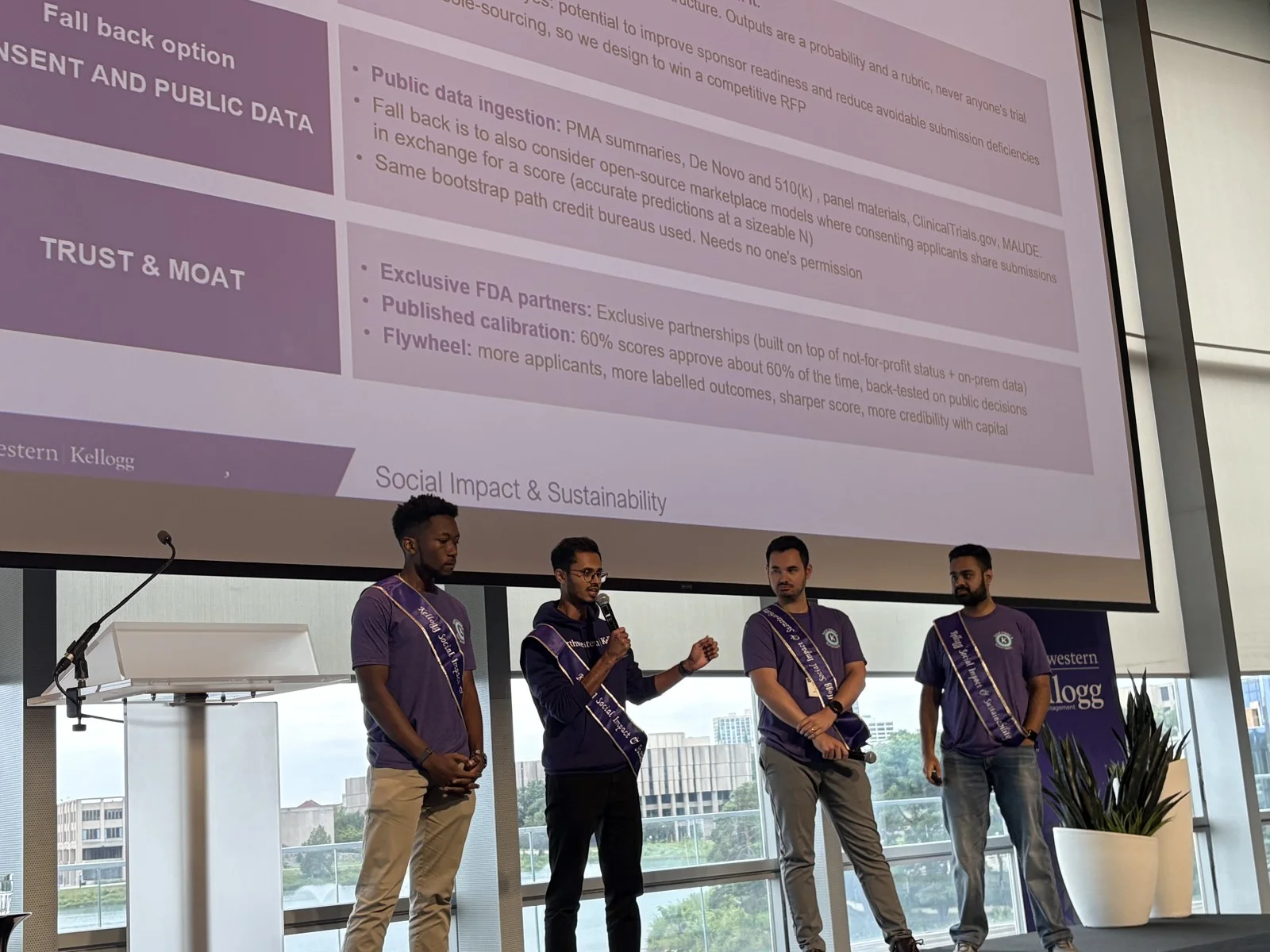
The funding decision
Who funds a device while it is still in trials?
A founder can raise enough money to develop a device and still run out before completing clinical trials. We focused on the investor on the other side of that decision. How could a lender judge the chances of regulatory approval when much of the relevant evidence sits with the applicant and the FDA?
Product proposal
A probability investors could check
We proposed estimating the likelihood of approval from historical decisions. Investors would see both the estimate and the rubric behind it. We would publish how often the estimates matched later outcomes. For example, among devices given a 60% chance of approval, about six in ten should eventually be approved. That was our proposed test of the score’s reliability.
Two ways to obtain the evidence
Our preferred approach required an FDA partnership. The model would train inside FDA-controlled infrastructure, and investors would receive scores and explanations while the underlying submissions stayed there.
We also designed a route that could start without a partnership. Applicants could share their submissions in exchange for a free assessment, and we could compare them with public decision summaries and clinical trial records. Whether those sources contained enough information to produce reliable estimates remained an open question.
Business model
Free assessments for innovators, paid access for investors
We proposed a nonprofit so device makers could receive an assessment without paying for a rating. Venture funds and specialty lenders would pay for subscriptions or deal-specific diligence reports. Those fees would support operations and further development.
Outcome
Healthcare Access & Affordability Track winner
Our proposal won the track at Kellogg’s 2026 Social Impact & Sustainability Days. The next test would be to score historical submissions using only evidence available before the decision, then compare those estimates with actual outcomes.
Download the original proposal (PowerPoint)